Released

The only son

Simonka De Jong
Intro

a film by Simonka de Jong

in co-production with IDtv-docs, the Dutch Buddhist Broadcast company, with support from the Dutch film Fund, The Dutch Media-fund, the Dutch coBo-Fund, the Flanders Audiovisual Fund.

Mini-foto voor intro: 
Info

a film by Simonka de Jong, in co-production with IDtv-docs, De Dutch Buddhist Broadcast company, with support from the Dutch film Fund, The Dutch Media-fund, the Dutch
coBo-Fund, the Flanders Audiovisual Fund.


The balance within a Tibetan family spread over several continents comes under strain when son Pema is forced to marry a girl from his native village.

Credits

Written & Directed by Simonka de Jong
camera Wiro Felix
sound recordist Rik Meier
edited by Menno Boerema
original music by Hans Helewaut
sound mix Nils Fauth

Trailer
Awards / Festivals

World première at IDFA, Amsterdam, The netherlands, 2012
official selection Hot Docs, Toronto, 2013
Documentary Edge Festival, New Zeeland, 2013

( ... )

REINHOUD, my sculptor

Blaise D'Haese
Intro

a film by Blaise D'Haese

in co-production with RTBF and VRT-Canvas

Mini-foto voor intro: 
Info

a documentary film by Blaise D'Haese, in co-production with RTBF and VRT-Canvas

Blaise D’haese lost his father, Flemish sculptor Reinhoud, a few years ago. He filmed him in the intimacy of the two last years of his life when he was already in bad health. His father was already 54 at the time of his birth, so when he dies, Blaise has the impression that he does not know his father well at all. For that reason, he decides to set out on a quest.

Is it possible to get to know someone after his death? How to describe one’s father, family and self? And how does one present a work of art in a film? These are the issues the documentary presents us with. As the son sets out to cover the footsteps of his father, he seeks to find a link between his artistic adventures and private life.

The film has the significance of an art memoire, the one that resulted from the movement sculptor Reinhoud belonged to, known as Cobra and one of the last major avant-garde, post-war artistic movements, taking from expressionism and primitive folk art. It is an ideal opportunity to meet the last of its surviving protagonists: painters Corneille and certainly Pierre Alechinsky, Reinhoud’s best friend with whom he shared a studio for more than 10 years.

It is also a brief history of Belgium. The maker asks questions about the links his father had with his family and native country, which he left at the age of 30 and which he never really spoke to him about. He discovers a Flemish family and its secrets.

With humour, the maker presents a whole range of characters beyond the norm, be they artists or the women in his father’s life. Parallel to these flesh-and-blood portraits, he also shows his father’s metal sculptures and how he sees them personally: as other characters, completely separate from it all, as if they were play mates. These were the brothers and sisters who filled the house in his youth.
Beyond his quest for a departed father, the maker approaches art through a private eye. He offers us a rare testimony about the life of an artist, as it is seen from the inside and thus makes art accessible and human.

Credits

WRITTEN & DIRECTED BY BLAISE D'HAESE

WITH REINHOUD, PIERRE ALESHINSKY, CORNEILLE, and may others
EDITED BY ANAIS ENSCHAIAN

ORIGINAL MUSIC BY LAURENT SAIET

Presskit
( ... )

GHISLAIN LIBART, THE LUMBERMAN

Manu Riche
Intro

A film by Manu Riche

(from the series Hoge Bomen II) a film by Manu Riche, in coproduction with Canvas and Simple Production. Supported by le Centre du cinema de la communauté française de la Belgique and Flanders Audiovisual Fund.

Mini-foto voor intro: 
Info

A film by Manu Riche (from the series Hoge Bomen II) a film by Manu Riche, in
co-production with Canvas and Simple Production. Supported by le Centre du cinema de la communauté française de la Belgique and Flanders Audiovisual Fund.


Ghislain Libart is a modest woodcutter from the Ardennes region, who became world player in international wood trading. European cut trees are transported to Egypt, to make ‘neo-antique’ furniture for the Chinese market. A humble woodcutter who comes to symbolize economic globalization.


Ghislain Libart is a lumberman from the Ardennes who became world player in international wood trading. He has transformed his littlecompany into a multinational enterprise. Libart exports European spruce trees to China, saws down French oak in Egypt and turns expensive wengé trees from the Congo and Sierra Leone into timber. Trees have become big business and Libart does not need to be told twice. Major enterprises all over the globe cannot function without timber and that is where he comes in. The industry may be booming, but the wood sector has received its fair share of economic blows due to the global crisis. We look into the globalisation of our economy, as seen through the eyes of a local lumberman.


The main character of our film is not your average logger. His profession appears to be quite traditional: he cuts down trees in forest such as the Ardennes. However, Libart has learned to trade his wood unlike anyone else and has established an international enterprise. The name Libart may not ring a bell immediately, but he is a modest and small time Belgian entrepreneur who wanted to expand his horizon. Through a series of events, he has become a high roller in a new economic balance. Even in high circles he is recognised as an expert in the lifting and trading of wood.

Trees are big business now. This is determined by the economic status of certain countries such as China. Ten years ago it was still a closed communist country. Today, it is a growing economic superpower, a true energy guzzler that plays a prominent role on the international stage. Besides China, there are more new economic grinding mills that need be sustained. Wood is a key source of energy and a primary resource. Industries have always sprung in places where resources are located in or above the ground. Those days are long gone. It is not absurd anymore to transport resources over a distance of tens of thousands of kilometres. Giants need to be fed no matter what it takes.

Ghislain Libart understands this like no other. Economic superpowers cannot survive without wood, thus they cannot survive without him. Libart’s know-how concerning logging is appreciated worldwide. From the Congo to Egypt, from Lebanon to China, Libart is contacted to chop, ship and trade wood.

This film seeks to unveil the shadow side of contemporary global economics. The film shies away from theoretical discourse. It allows viewers to see and feel how a common forester experiences, follows and undergoes global economics. The economic reality Libart and his partners work in is a visible, tangible world. It is far from the world of indices and stock news. It is made of wood and trees, but of course there is money and negotiating involved. We hear and read a lot about globalisation and immediately associate those reports with images of multinationals and millions of Chinese people. Rarely do we see and know the people who actually play the global game. Libart’s story renders globalisation concrete and tangible.

Manu Riche has found a wonderful character in Ghislain Libart to narrate the current event of globalisation. It is a great opportunity to talk about an interesting theme through the goings on of a seemingly small scale and traditional profession.

Libart is a rural and surly lumberer from the Belgian Ardennes. His personality has humorous sides as well as raw and tough edges. His expertise is required all over the globe, which makes him living proof that no one in our society is left untouched by globalisation. One way or another, we all have to face it.
The harsh laws of trade know no boundaries and are universal. Anyone who gets involved is welcome to the club of international traders. This became clear the moment the economic crisis hit. The global demand for wood plummeted and forced Libart to adjust his goals. The successes of an incessantly growing economy immediately turned into an unforeseeable malaise.

Manu Riche has proven many times before that he is a passionate filmmaker. Using his trademark direct cinema style, this film not only strongly portrays this extraordinary woodchuck, but also the demise of the global economy, the ending of a juicy chapter as well as the frantic attempts to resuscitate the trade business…

Credits

WITH GHISLAIN LIBART

WRITTEN & DIRECTED BY MANU RICHE

CAMERA DIDIER HILL-DERIVE, RENAAT LAMBEETS,
JEAN-FRANÇOIS BOUCHER

SOUND ENGINEER DAN VAN BEVER, LUC CUVEELE
EDITED BY MICHELE HUBINON
SOUND MIX YVES DE MEY
DELEGATE CO-PRODUCER KATHLEEN DE BÉTHUNE

Press

HUMO - 03/11/2009

Hoge bomen: Ghislain Libart, boomhakker


't Zijn drukke tijden voor wie Manu Riche heet. Nog maar net is zijn
langverwachte film over Tom Barman in première gegaan
('Portrait of a Young Man as an Artist').
Zondagavond kunt u in 'Quai des Belges' op La Deux nog eens kijken
naar zijn documentaire over Bozar-baas Paul Dujardin, en vanavond
laat hij ons kennismaken met  Ghislain Libart, een Ardense boomhakker
die zijn handeltje tot een multinationaal bedrijf uitbouwde. Een
boomhakker? In 'Hoge bomen'?  Canvas | dinsdag 22 u.


MANU RICHE «Ik ben hem op het spoor gekomen via een
handelaar in spaanplaten. De houthandel leek me al een rare
business, en Ghislain Libart was mij helemáál onbekend.
Maar bij onze eerste ontmoeting - in een bos in Duitsland
waar hij douglassparren aan het verkopen was aan Chinezen
- was mijn interesse meteen gewekt.
»Libart komt uit een vrij arme familie uit de buurt van
Houffalize. Op zijn veertiende is hij met zijn vader en broers
als boomhakker begonnen, en tegenwoordig vliegt hij als
een echte avonturier de wereld rond. We hebben hem
gevolgd van begin 2008 tot augustus 2009: in Egypte, in de
Landes, in China... Hij is bijna nooit thuis.»
HUMO Eén ding werd me bij het bekijken van het
portret niet duidelijk: is Libart steenrijk of moddert hij
maar wat aan?
RICHE «Het gaat op en neer. Toen we begonnen te filmen,
had hij twee Mercedessen, op het eind alleen nog maar een
Golfje. Maar eigenlijk raakt hem dat niet. Het gaat hem niet
zozeer om het geld, maar om het ondernemen zelf.
Daardoor was het ook een plezier om hem te volgen. Al mijn
andere films gaan over mensen die constant bezig zijn met
strategie, maar Libart hééft helemaal geen strategie: hij wil
gewoon met dat hout bezig zijn, dag en nacht. Zijn eerste
huwelijk is er zelfs aan kapotgegaan. Nu heeft hij een
vriendin uit Madagascar. Daar is blijkbaar versteend hout te
vinden waar een aardige stuiver aan te verdienen valt, dus
dat wil hij nu ook gaan exporteren.»
HUMO Naar zijn tonnetje te oordelen is Libart een bon
vivant. Aan het eind van de film zie je hem - na een
gedenkwaardige Chinese zakenlunch - zowaar naar
buiten waggelen.
RICHE (lacht) «Hij was stomdronken, ja. Door zo vaak naar
China te gaan, is hij een halve Chinees geworden - we
hebben er zelfs aan gedacht om de titel van het portret te
veranderen in 'De mandarijn'. Voor hem én voor ons heeft
de sake rijkelijk gevloeid. En zoals hij zelf zegt: 'Ik zeg nooit
nee.'»
HUMO Net als de Chinezen!

Director

MANU RICHE

Born in 1964


Filmography


For the magazine Strip Tease RTBF.


Conversations: 1989 – 13’ 16 mm. Two ladie in a Brussels café, the first takes the tram 26, the other the 81...

La pêche: 1990 – 13’in 16 mm. The story of a showroom and the car seller who dreams of fishing salmon in Scotland…

Les aventures de la famille De Becker: 1991 – 15’ in 16 mm. The story of a Brussels corridor wherein lives a ‘happy family’...

Etat fort civil: 1992 – 15’in 16 mm. The story of the civil servants in the city administration of Brussels.

Documentaries:

The Flemish cultural landscape in seven episodes: (RTBF) 1992 – 52’ in 16 mm. The landscape trough portraits of Flemisch artists Wim Vandekeybus, Frie Leysen, Paul Goosens, Paul Bottelberghs, Freddy…

Anvers93: (RTBF/FR3/WDR) 1993 – 40’ in 16 mm. A cultural city ?

De Misantroop: (KVS/VRT) 1994 – 52 ‘in Beta digi. A television essay

Brussels 25 Novembre: 1996 (VRT) – 52’ super 8/betacam. Thes tory of a faits divers.

The Black Star: (NPS/VRT/RTBF/Vlaams filmfonds) 1998 – 52’ super 16.  The story of a Nigerian football player in Belgium.

Welcome to my world: 2000 (VPRO/RTBF/Vlaams filmfonds) – 80’ in super 16.  The story of a king–coach of a small cycling team.

Baudouin I/ Boudewijn I: 2001 (FR3/RTBF) – 52’ in Beta Digi.
The story of King Baudouin as told by himself.

L’Homme qui n’était pas Maigret: 2002/3 (France2-TSR-RTBF) – 50’ in betadigi/16mm. The invention of the author G.Simenon.

The Politician: 2005 Canvas/ VAF ,52’ in HD: The rise and fall of the sociaist leader in Flanders.

The President: 2005 Canvas/VAF, 52’  in HD: A portrait of the president of footballclub Brussels.

The Salesman: 2006 Canvas/ VAF  in HD: A portrait of a big boss in Antwerp ports business.

Ghislain Libart, Bûcheron: 52’: in HD (VAF, VRTcanvas, Comm.française, Simple Production)

Paul Dujardin, the long march: 76’ en 56’ in HD (VAF, RTBF, ARTE Belgique, VRT canvas)

Portrait of a young man as an artist: (VAF/Riche/filmnatie) in co-direction with Renaat Lambeets (camera)
a portrait of Tom Barman, frontman of the popular band Deus.

Presskit
( ... )

Home & Away

Ann Van de Vyvere
Intro

a documentary film by Ann Van de Vyvere

in co-production with Globe Aroma, Kaaitheater (BE). Supported by VGC, Koning Boudewijnstichting

Mini-foto voor intro: 
Info

Imagine the following situation: your house is about to explode and you have exactly three seconds to save one item. Which precious item do you rescue from the fire? This film zooms in on 10 individuals and the items they cannot do without. Collecting objects is one of those things that separate man from animal. Every human being has baggage, despite his or her origins or destination. Humans collect items to safeguard their identity. Our favourite objects can recount our lives or harbour beautiful memories. They can even be a metaphor for thoughts or creeds that we hold dear.
The chosen items disclose amazing and compelling stories about the 10 individuals. The only thing the owners have in common is that they are all modern nomads. In other words, they have no permanent address and are always ‘on the go’. In the documentary, we learn that for some people, the nomad lifestyle is anything but a personal choice. They can be homeless, drifters or refugees. Others such as expats, newcomers and adventurers simply seek excitement. Activists choose to migrate constantly for their ideals and beliefs. Although the characters are diverse, they each have their own prized possession that makes them feel at home wherever they go. Home is a place where someone lives and feels safe. It is the centre of a household, of important relationships and interests.
The chosen objects in the documentary embody all these concepts. This makes them irreplaceable to their owners. Lies for instance, always carries a blender in her bag. Since she is currently living in three places, mixing soup is a ritual that helps her to feel at home wherever she is. Khaled is a Palestine refugee who seeks comfort in his keffiyeh at times when he feels down. This garment was made famous by the late Palestinian leader Yasser Arafat. The scarf reminds Khaled of his home country and his mother. Stephan inherited a traditional mask from his father. However, the higher social status it represents is not acknowledged in the 'Klein Kasteeltje'.
Hamou on the other hand, claims strange objects and stores them in the building where he is squatting. In his room, he makes the objects perform like puppets in his own private theatre. Jean Marie is a Rwandese refugee who believes that home is where your… corpse is. Which is why he carries a self-made coffin wherever he goes.
The documentary introduces these remarkable individuals to us through their objects. Gradually, we see the construction of an exhibit in the Jubelpark Museum in Brussels, which houses many other objects. The exhibit is the foundation of the film. Our characters work towards it, though it is in no means the goal or core concept of the film. Home and Away is a film about home, objects and people who do not have a fixed address. The documentary tells the story of the characters. At times those stories can be hilarious, moving or even heartbreaking. It is also an impression of what it means to be on the road all the time: the migrating, the moving and the freedom. It questions what people around the globe understand as living conditions, not just physically but mentally as well.

Credits

WRITTEN & DIRECTED BY:
ANN VAN DE VYVERE
CAMERA:
JASON BOENNE
EDITED BY:
NICO LEUNEN

Director

Ann Van De Vyvere

 (º1975)


Ann Van de Vyvere is the artistic director of the Brussel based artistic organisation Irma Firma (www.irmafirma.be), which she founded in 2004.  Before that, she obtained her master’s degree in Artistic Painting in 1998. Ever since, she has been actively involved in various artistic projects such as performance theatre, visual art, documentary, art film and workshops.

Artistic vision and work method

The projects are socially relevant and aim to raise awareness among viewers. Things are not always what they seem. Ann Van de Vyvere does not believe in creating new spaces and ideas but in redefining the ones we already have by shedding light on reality, on every day objects.
A real voyage of discovery consists not of seeking new landscapes but of seeing through new eyes.
M. Proust, A la recherche du temps perdu

A selection from the many project of the past years: HOME & AWAY: screenplay & production documentary film (’52) co-produced by Off World, Globe aroma, Kaai theatre, Margartia Production, Klein Kasteeltje + Artistic direction, Object exhibition Jubelparkmuseum. // Theatre Festival: panel member debate on audience mediation and festival formats. With Therese Legierse, Ann Van de Vyvere, Guy Bovyn, Els Leysen, Tom Bonte, by Julie Rodeyns (A-D-A vzw). // PECHA KUCHA: performance, Bip, Brussels (B) // WAARHEID, LEUGEN EN SPECIAL EFFECTS (Truth, lies and special effects): play, Vrijstaat O, Ostend (B) // SALLE DES PAS PERDUS (Room of lost steps): dance performance + publication book of photographs + CD audio edit, Brussels (B), in association with BBOT-BNA. // THE WALK: performance walk/promenade + play première Bourse Theatre Brussels (B) // WALK THE WALK: audio walk, in association with BBOT-BNA. // A SMALL WALK WITH GIANTS: performance, MAÏS#4, Bruxelles / Brussels (B) // HAVE A SMALL WALK IN AN HOUR OF 50 MINUTES: walk performance, Recyclart, Brxl BRAVO. // HOW TO SURVIVE IN A CITY, work shop/performance, Kaai theatre Brussels, Brakke Grond & DasArts, Amsterdam (NL), Buda Kortrijk, Cultural Centre Berchem, Dag van de student/ Journée de l’étudiant (Student day), GC De Markten, Bruxelles / Brussels (B) + Maksdag, Stuk Leuven,  BRXLBravo  Art festival, Bruxelles / Brussels (B) // Meir de Irma, interactive walk/ promenade interactive, Antwerp / Anvers (B) Tweetakt festival.

Presskit
( ... )

GLENN AUDENAERT

Steve Thielemans
Intro

a documentary film by Steve Thielemans

(from the series HOGE BOMEN II) in coproduction with Canvas, Riche, Riche & Riche with support from Flanders Audiovisual Fund

Mini-foto voor intro: 
Info

a documentary film by Steve Thielemans (from the series HOGE BOMEN II) in coproduction with Canvas, Riche, Riche & Riche with support form Flanders Audiovisual Fund.

After many scandals that shook the Belgian political and judiciary system in the nineties, Glenn Audenaert became the new chief of the federal police. A portrait of this eccentric policeman and his colossal responsibilities.

Credits

WITH GLENN AUDENAERT
ERIK JACOBS, FRANK DE WITTE, MICHELINE MAISON


WRITTEN & DIRECTED BY STEVE THIELEMANS
CAMERA RENAAT LAMBEETS, BRUNO PEETERS, JAN MESTDAGH
SOUND ENGINEER LUC CUVEELE, JEVON LAMBRECHTS, JAN VAES
EDITED BY JAN DE COSTER
MIXAGE YVES DE MEY

Trailer
Presskit
( ... )

4 Elements

Jiska Rickels
Intro

a documentary film by Jiska Rickels.

a Fu Works production in co-production with NPS, Dutch Film Fund, YLE, Off World and Canvas. Opening film IDFA December 2006.

Mini-foto voor intro: 
Info

a documentary film by Jiska Rickels.
a Fu Works production in co-production with NPS, Dutch Film Fund, YLE, Off World and Canvas. Opening film IDFA December 2006.


Since the beginning of time the human race tried to explain the primal elements of their world: Earth, Water, Fire, and Air. In these elements, one saw the kingdom of the gods. To keep the gods satisfied, the elements were handled with care. During the development of mankind they were deciphered, lost their mystic and transformed into pure matter. As an effect, people lost their respect for their power.

The force of the elements were used, however, they were never totally dominated, controlled or predicted. This means that we are nowadays still fighting the sometimes dangerous battle to control earth, water, fire, and air.
It is fascinating to see that those who are fighting this battle show a greater respect to the elements. In them we can see a sparkle of the primitive urge which is mostly lost by humanity.

Credits

SCENARIO & REGIE JISKA RICKELS

DIRECTOR OF PHOTOGRAPHY MARTIJN VAN BROEKHUIZEN
ORIGINELE MUZIEK HORST RICKELS
GELUID JILLIS MOLENAAR 
MONTAGE KRISTIAN CLAAS 
SOUND DESIGN TOM BIJNEN
EINDREDACTEUR NPS CEES VAN EDE
PRODUCENT SAN FU MALTA (FU WORKS)

Director

CV Jiska Rickels & Filmography

Prior to obtaining a director’s degree for documentaries at the Dutch Film & Television Academy in Amsterdam, Jiska Rickels (1977) was a regular sound-performer for different musical theatre productions. PLAZA FUTURA, MAGMA SANG, HYMNEN AN DIE NACHT and  DE BAZUINEN VAN JERICHO are just a few examples of her prolonged activity in the world of new music. These and other productions were performed at various Audio Art Festivals across Europe.
Three years into her director’s study, she moved from Holland to Germany where she spent two years at the Hochschule für Fernsehen und Film in Munich. There, under the wings of Prof. Dr. Schreyer and in cooperation with Sanne Kurz, she realized the documentary HIMMELFILM.
Furthermore, Jiska Rickels was involved in THE STORY OF THE WEEPING KAMEL; another documentary which was nominated for an Oscar. 2003 saw her graduating at the Film Academy with the documentary UNTERTAGE.
Since 2004, she’s been working on a series of four documentaries, entitled VIERLUIK, of which the episodes ‘WATER’ (October 2004) and ‘FIRE’ (Summer 2005) have already been finished.


2004   Electriek     NPS Kort! Fiction short movie / 35mm / 9 min.

An 85-year-old inhabitant of the Belgian Ardennes has managed all her life without electricity. When the power-company finally comes round to connecting her remote house to the main rig, she informs the workers of her impotence to use the electricity since she doesn’t have any electrical appliances. A great opportunity for her neighbours to indulge in a bit of electrical gift-shopping.

2004   HIMMELFILM     Film academy Muenchen / documentary / S35mm / 20 min.
What did heaven look like when we were young? In trying to answer this question, people mostly look out of their window, searching dreamily for a piece of sky that’s tucked away between skyscrapers. For this documentary, tones and voices were recorded all over the world, ranging from childhood-memories to thoughts of heaven and home. Everybody has it’s own childhood-heaven. Own memories, forgotten corners, blank spots of childhood that fade away like colours in old photographs. Is heaven everywhere the same? Is it always present?


2003   UNTERTAGE     Graduation project / documentary / 16mm / 25 min.   

This impressionist documentary accompanies two miners down one of Germany’s last coal mines during one day.


2002   GÖTTERDÄMMERUNG    Experimental film/ 16mm / 17 min.
GÖTTERDÄMMERUNG is an experimental movie about a person who travels a futuristic, industrial landscape where the gods have been substituted by enormous machines. A short movie about the quest for man’s origins.

Awards / Festivals

grand judy award Trento Film Festival, 2008, Italie

Official opening film International Documentary Festival Amsterdam, 2006, Pays-Bas

Best Photography award Chicago International Film Festival, 2007, Etats-Unies

DDG Award Nederland (Dutch Directors Guild)

Christal Film Nederlands Film Festival, 2007, Pays-Bas

Grand Price Trento Film Festival, 2007, Italie

Mention spécial International Environmental Film Festival Ecocinema, 2008,  la Grecque

selection officielle Femina Film Festival, Rio de Janeiro, 2007, le Brazil
selection officielle Film Festival Athene, 2007, la Grecque
selection officielle Mar Del Plata Film Fest, 2007, Brazil
selection officielle Seattle International Film Festival, 2007, US
selection officielle Festival International de Ciné en Guadalajara, 2007, Mexique
selection officielle Trento Film Festival (Grand Price), 2007, Italie
selection officielle International Festival of New Film Split, 2007, Coratie
selection officielle Architectuur Film Festival Rotterdam, 2007, Pays-Bas
selection officielle Karlovy Vary International Film Festival, 2007, République Tchèque
selection officielle B-side Festival Genius Hot Doc’s, 2007, Canada
selection officielle Open Doek Festival Turnhout, 2007, Belgique
selection officielle Madcat Women’s International Film Festival, 2007, Californie, Etats-Unies
selection officielle International Environmental Film Festival Ecocinema, 2008
selection officielle Big Sky Documentary Festival, Missoula, 2008, Montana Etats-Unies
selection officielle Rodos International Films and Visual Arts Festival, Rodos, 2007, Greece
selection officielle Talinn Black Nights Film Festival, Talinn, 2007, Estonie
selection officielle Iran International Documentary Film Festival, Teheran,2007, Iran
selection officielle Film Festival of Bangkok, 2007, Thailande

Diffusé par NPS, VRT-CANVAS

Distributeur/vendeur:    A-Film

( ... )

BETWEEN HEAVEN AND EARTH

Frank van den Engel & Masha Novikova
Intro

a documentary film by Frank van den Engel and Masha Novikova

in co-production with Zeppers Film & TV and IKON (NL), supported by Media-fund (NL) and Flanders audiovisual fund (BE). Released in january 2007

Mini-foto voor intro: 
Info

a documentary film by Frank van den Engel and Masha Novikova in co-production with Zeppers Film & TV and IKON (NL), supported by Media-fund (NL) and Flanders audiovisual fund (BE). Released in january 2007

On the long journey of many months along the ancient Silk Road from Europe to China, the circus was the only entertainment along the way. In Uzbekistan, currently under dictatorship, the circus tradition is thriving, just as it was in the days of Genghis Khan, and the circus acts have changed little. Two circus artists must choose between continuing the old circus tradition and political involvement. Their choices have a serious effect on their lifelong friendship.

Credits

DIRECTED BY FRANK VAN DEN ENGEL & MASHA NOVIKOVA

WRITTEN BY FRANK VAN DEN ENGEL
CAMERA & LIGHT MELLE VAN ESSEN
SOUND ENGINEER PIETERS GUYT
EDITED BY STEFAN KAMP
ORIGINAL MUSIC HANS HELEWAUT
PRODUCED BY JORINDE SORÉE, WILLEMIJN CERUTTI
ERIC GOOSSENS, FREDERIK NICOLAI

Press

SLANT MAGAZINE|

Circus Politics: Frank van den Engel & Masja Novikova's Between Heaven and Earth
BY SHEILA O'MALLEY ON MAY 4TH, 2007 AT 6:30 AM IN FESTIVALS, FILM
Screened at the 2007 Tribeca Film Festival.

Tursan, a gentlemen with a white beard and gold teeth, smiles into the camera and says, "For my circus, I need peace." Peace has been hard to come by in Central Asia, especially since the crack-up of the Soviet Union, and Tursan says, "A circus should steer clear of politics." The circus is a major cultural tradition in this part of the world, but in the perilous 1990s it was not always possible for a circus to "steer clear of politics." Between Heaven and Earth (Tussen hemel en aarde), a lovely, lyrical documentary directed by Frank van den Engel and Masja Novikova, looks at two interconnected circus families in Uzbekistan, examining how they have been impacted by dictatorship (both Russian and Uzbek) and what it means for the circus.Achat and Tursan have been friends and circus performers since they were little boys. Their paths have diverged in recent years due to differing philosophies about politics. The dictatorship in Uzbekistan, which rose in the wake of Communism's downfall, has persecuted both of them for their political affiliations. Achat spent two years in prison, where he was tortured. "That is something we do not talk about," says Achat. Achat and Tursan were members of ERK, the democratic party, for which they were both arrested. Tursan, since the death of his son (Achat claims that Tursan's son was murdered, as retaliation for his father's political activities), has backed out of politics completely. He focuses on his family and on the circus. Achat, however, continues to organize, heading up a human rights organization, which provides legal aid to those in need. His family, his friends, plead with him to be cautious, to not make waves, to not call attention to himself. Tursan refuses. There is now a rift, a painful rift, between these two friends.
Between Heaven and Earth mixes interviews (featuring Achat, Tursan and others) with absolutely incredible footage of their circus performances, all set against the mountainous Uzbekistan landscape. The circuses, for the most part, take place in dusty public squares. This is not Cirque du Soleil, with big-budget production values and a soundtrack. This is circus at its most pure, its most raw. These people are amazing. We see a strong man pull a car with his teeth. We see gravity-defying tumbling acts. There are shots of the tightrope-walker from below, as she runs (yes, runs) across the tightrope with a 3 year old boy standing on her shoulders, the blazing blue sky arching above them in lieu of a circus tent.The tightrope walker is one of the most haunting characters in the film. She is a young woman, beautiful, and she says, in her interview, that all of her girlfriends are now focusing on getting married and having children. She thinks maybe she should start thinking about those things too. However, her work fills up all of the space in her mind. There's a loneliness to her, an isolation, but what else can she do? In the dusty public squares of Uzbek villages, people cluster together, escaping the roughness of their lives for an hour or so by staring silently up at the blue sky and watching a young woman running above them on a wire. She takes on an almost mythical aspect in these scenes. She is no longer a mere individual. She is her tradition. She is the circus of Central Asia. A floating figure, hovering above politics, above poverty, excellent at what she does, not giving in to despair, not accepting a second-hand life, her focus of laser-point intensity, she represents the best in us all.I was riveted by the film from beginning to end. It is a rare look at a world still haunted by the old paths of the Silk Road, by Tamurlane, by Genghis Khan, by Stalin. Politics come and go. Dictators rise and fall. But the circus is eternal. Between Heaven and Earth is not to be missed.

Director

Frank van den Engel

Frank van den Engel (1956, Rotterdam). In 1997 he started an independent documentary production company Zeppers Film & TV as executive producer. In ten years time he produced over 50 films, for theatre and television. Some of these have been awarded at prestigious festivals around the world: Andre Hazes - she believes in me, Dans, Grozny Dans, Voices of Bam. Nowadays he combines production work with the development and realization of his own film projects, and with the coaching of first time directors. His debut Normaal - I always come back (82 mins) was theatrically released in 2002. His latest documentary Between Heaven and Earth (70 mins) was released in the cinema in 2007.


Masha Novikova

Masha Novikova was born in 1956 in Moscow, USSR. She studied pedagogy at the University of Moscow. And later worked as a teacher Russian language and literature. In Kazachstan she worked as a director-assistant in a German drama theater. Short before the fall of the Berlin Wall she came to the Netherlands, since then she has been living and working in Amsterdam. First Masha Novikova worked as interpretot and as a teacher Russian. She also worked as a guide in the 'Szar Peter House' in Zaandam. Later Masha started to work as an executive producer for Dutch television. At the same time she studied by Stefan Mayakowski at the 'Kunstweb' camera, script writing and filmdirection.

Since the year 2000 she also started to film herself, she worked with mini-dv as the second film photographer for several documentaries. In 2005 she directed her first film 'Fallen Engel', documentary about traffic in East -European women who were brought to the Netherland to work as prostitues.

Before making 'Three Comrades' Masha Novikova did some earlier work in Chechnya for documentary by Leo de Boer entitled 'Train to Grozny'. That was in April 2000, just after Grozny's total destruction. Driven by a feeling of shame about her own country, she has felt very much involved with the Chechnyan war ever since. In 2002 Masha Novikova did some shooting in Grozny for Jos de Putter's film 'Dance Grozny Dance'.

In addition, she did several film reports on Chechnya. She also worked in 2003 with Amnesty International on a film about Lidya Yusupova, who won the Martin Ennals prize in Geneve.

Awards / Festivals

Première Mondial à Rotterdam Film Festival, Pays-bas
Sélection officielle Tribeca International Film Festival, New York, USA
Sélection officielle Golden Apricot, l'Armenie
Sélection officielle Official selection Melbourne International Filmfestival, Australie
Sélection officielle Official selection Louis Vuitton Hawaii International Film Festival, USA
Sélection officielle Vancouver International Film Festival, Canada
Sélection officielle Sevilla Festival de Cine, Espagne
Sélection officielle 1001 Belgesel Film Festival, Turquie
Sélection officielle Official selection Forumdoc.bh, Brazil
Sélection officielle Official selection Watch Docs Festival, Pologne
Sélection officielleOne World IFF, Tcechie
Sélection officielle FIAAP  International Film Festival of Performing Arts, Portugal
International Jury - Documentary Prize of the Oficial Selection  
University Jury - Documentary Prize

Sélection officielle Taiwan International Documentary Festival, Taiwan
Sélection officielle, Document 6 International Human Rights Documentary Film Festival

Presskit
( ... )

LA TERRE AMOUREUSE

Manu Bonmariage
Intro

A FILM BY MANU BONMARIAGE

in co-production with RTBF, supported by le centre du cinéma de la communauté française de la Belgique and Flanders Audiovisua Fund.

Mini-foto voor intro: 
Info

a documentary film by Manu Bonmariage, in co-production with Iota Production and RTBF, supported by le centre du cinéma de la communauté française de la Belgique and Flanders Audiovisua Fund.

A farmer and his land. This is not your average love story. This tale is more down to earth than anything you can ever imagine. Is farming a true calling? How much love does it take for a farmer to fulfil his destiny successfully? Four stories portraying four families lead us through four seasons in search of the heart of agriculture.

Credits

flmed & directed by Manu Bonmariage

Edited by Tom Denoyette

Press

Interview with Manu Bonmariage

Le Soir - 8 novembre 2012

Manu Bonmariage nous plonge dans la vie des fermiers

Le réalisateur a suivi le quotidien d'agriculteurs près de Stavelot. Les fermiers y évoquent leur vie, avec ses joies et ses difficultés.

« Je me situe davantage dans l’anthropologie, le côté humain… Je suis intéressé par le rapport immédiat avec les gens. Il y a beaucoup d’humour aussi », déclare le réalisateur Manu Bonmariage. © Iota Production.
Les Thonus, les Lambotte, les Neuville, les Foguenne… Ils respirent la terre, ces noms de famille. Des générations d’agriculteurs, du côté de l’Ardenne liégeoise. Dans la région de Stavelot, pour être précis. Rien n’y aurait changé, s’ils avaient été des producteurs de lait en terre luxembourgeoise, sur les plateaux et dans les vallées de l’Ardenne. La passion y est la même. Les caractères y sont aussi bien trempés. Durant un an, le réalisateur Manu Bonmariage a suivi ces familles. Son approche, caméra à l’épaule, débouche sur un film, intitulé La Terre amoureuse.

Du cinéma direct
Manu Bonmariage s’est plongé dans le quotidien de ces agriculteurs. Un film tourné à la manière de Strip-Tease : « Une forme de cinéma direct », précise-t-il. Cette terre ardennaise, il la connaît bien. « J’allais manger mes tartines avec les fermiers, quand j’étais petit. Même si j’ai fait le tour du monde avec ma caméra, je n’avais jamais regardé de plus près ce pays de mon enfance. Cette intrigue, à 71 ans, me trottait dans la tête. Avant vous aviez des fermes partout, dans les villages. Aujourd’hui, il en reste parfois trois ou quatre… Et puis, les fermes où l’homme, la femme et la famille travaillent encore ensemble sont de moins en moins nombreuses », constate-t-il.

La profession enchaîne les coups durs et les crises, dont celle du lait, qui a récemment marqué les esprits. « Dans le film, j’ai voulu un échantillon de ce qu’était la vie de familles différentes. Un agriculteur se lance, une autre a choisi la voie de la modernisation, un troisième continue à vivre selon un modèle plus familial… », poursuit le réalisateur. Manu Bonmariage n’analyse pas l’impact des crises et la mutation du monde agricole, même si, à travers des témoignages, la perte de maîtrise des fermiers sur leur production se ressent. « Je me situe davantage dans l’anthropologie, le côté humain… Je suis intéressé par le rapport immédiat avec les gens. Il y a beaucoup d’humour aussi. »

Il sort de cette expérience inquiet « pour l’idéal de ces agriculteurs. La plupart ont bien sûr envie de gagner de l’argent, mais ils n’ont pas envie de perdre ce plaisir d’être dans le vivant. La menace de l’industrialisation du lait fragilisera encore leur vie simple. Comment faire, par exemple, dans cette famille qui vient d’acheter une ferme ? Cela prend aux tripes ! ». Manu Bonmariage a trouvé le titre de son film, La Terre amoureuse, avant de l’avoir tourné. « C’est la première fois de ma vie que cela m’arrive. J’avais une tante qui me chantait que la terre est commune une femme. Quand elle est amoureuse, elle veut être ensemencée. Comment vivre alors cette passion, quand la femme ou la terre s’en va ? », s’interroge-t-il. Les Thonus, les Lambotte, les Neuville et les Foguenne apportent leurs réponses, mêlées d’incertitudes, de joies et de défis, au fil des saisons et des septante-deux minutes du film.

Cinergie.be

Les derniers sioux des Ardennes enchantées
Au moment où les agriculteurs vont batailler sur les marches du Parlement, où Jean-Jacques Andrien se penche avec beauté sur leur vie et les mutations/convulsions du monde moderne, Manu Bonmariage a empoigné lui aussi sa caméra pour aller filmer, dans les Ardennes, quelques familles amoureuses de leurs vaches, accrochées à leur territoire, écrasées par la violence de politiques communes qui leur sont imposées. En quelques visages, en plusieurs paysages, Bonmariage filme avec chaleur un monde très riche, très divers, qui lutte, se débat, se révolte ou fait son bonhomme de chemin, mais des familles qui résistent et avancent, « les derniers paysans des Ardennes profondes », comme une espèce en voie de disparition. Des cowboys solitaires, des hobos isolés, les derniers sioux assiégés par l’économie européenne et sa cavalerie de résolutions. Saisis à la volée et balancée avec vigueur à notre regard.
La terre amoureuse s’ouvre au générique sur ce carton : « Un vrai film ardennais de… ». Tiens, question, ce serait quoi alors un faux film ardennais ? Et d’ailleurs, puisqu’on en parle, qu’est-ce qu’un film ardennais ? La réponse est là, dans l’épaisseur des images, la vivacité de cette caméra, l’énergie qui s’en dégage. Un vrai film ardennais semble être un film qui plonge les deux mains dans le cambouis des emmerdes de paysans, et les deux pieds dans le désir ensorcelant d’une terre amoureuse. Car la terre est amoureuse en Ardennes, paraît-il, elle est comme une femme, disent-ils tous, ou chantent-ils, plutôt, dans leur espèce de rock d’église irrévérencieux et surchauffé, une femme qui veut être ensemencée, une femme pleine de désirs et persévérante quant à ce qu’elle veut, qui ne se laissera pas abandonner. Et Bonmariage de formuler ainsi sa question, leur question : « Mais comment vivre cette passion de la terre quand c’est la terre elle-même qui disparaît ? » Que la possibilité même de l’aimer, d’en vivre, de l’ensemencer, est menacée ?
Manu Bonmariage n’y va pas par quatre chemins. Il ne fait pas de longs plans esthétiques sur la campagne embrumée. Son propos n’est pas là. Caméra au poing, au corps, Bonmariage y va, il est là, levé aux aurores pour prendre le café avec l’un, pour capturer ici la première traite des vaches. Il pose ses questions, n’efface pas sa présence, saisi des mises en scène, des interrogations, des dénuements. Sa caméra est en sillage, elle suit, elle bouscule. Il est là, un corps qui avance dans le réel, qui s’en coltine la pesanteur, la rugosité, la lourdeur, mais aussi la beauté, la joie, les éclats. Dans son refus de toute sorte de bucolique, avec sa musique rock qui vient faire vibrer soir et matin, dans cette caméra chaotique qui tente de saisir des morceaux d’une réalité éparse, Bonmariage véhicule la même énergie qui agite ceux qu’il filme. Et particulièrement cette figure centrale et patriarcale de La terre amoureuse, pivot de toute une famille, Daniel Lambotte, personnalité tonitruante et attachante, chaleureuse et colérique, bulldozer bosseur amoureux des femmes, des vaches et de son exploitation qui fait sa fierté, ses angoisses, ses questions - son beau souci.
Plus que des modes de vie en voie d’extinction, Bonmariage filme des choix de vie qui s’avèrent désormais (et presque malgré eux) plus ou moins radicaux. Pour certains, ces paysans sans enclos, sans étable, qui baladent leurs vaches comme ils l’entendent, c’est presque un nomadisme sur une terre entière qui semble leur appartenir. Pour d’autres, ces vaches qu’ils aiment et qui leur demandent tant de boulot, comment les rentabiliser pour réussir à se battre, à faire face, à tenir tête ? Pour continuer donc. Pour d’autres encore, c’est toute la question de leur vie familiale et amoureuse qui est en jeu, dans l’isolement qu’ils ont choisi et leur dur labeur. Ces hommes humbles ou forts, riches ou plus pauvres, luttent encore, ne serait-ce que parce qu’ils vivent là, toujours, et aspirent, assiégés, éreintés ou insouciants, à continuer, encore. Appétit de vivre, d’amour, d’argent, de chants, de fièvres et de musiques, dans ces Ardennes lointaines, voilà tout ce que le cinéma de Bonmariage vient convoquer à travers ces hommes et ces femmes dont il capte les aspirations et la soif inextinguible de liberté.

( ... )

Little Heaven

Lieven Corthouts
Intro

a documentary film by Lieven Corthouts

in coproduction with Lichtpunt, with support from the Flanders Audiovisual Fund, the Belgian Development Cooperation, the Belgian Federal Government Tax Shelter. Distributed by Taskovski Films

Mini-foto voor intro: 
Info

a documentary film by Lieven Corthouts. In coproduction with Lichtpunt, with support from the Flanders Audiovisual Fund, the Belgian Development Cooperation. Distributed by Taskovski Films

developped at ESODOC 2010 and the Berlinale Talent Campus 2011


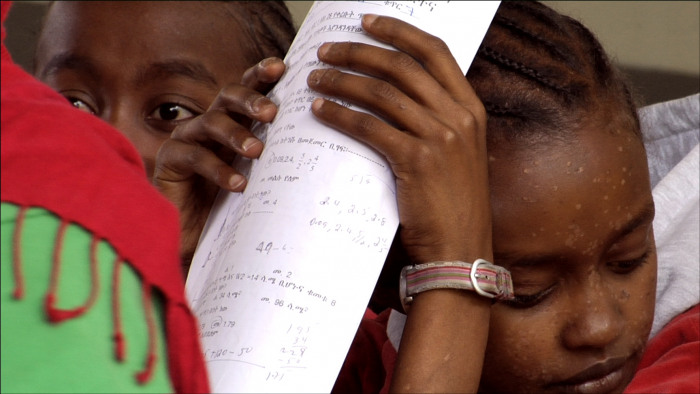
Right In the heart of the Ethiopian capital Addis Ababa is a small orphanage called 'Little Heaven'. One of the orphans, Lydia, is 13 today.  A truly joyful event, because she can now move to the ‘other house‘ where all of the ‘big kids’ live.  Unfortunately this special day is  overshadowed by the shocking news delivered to her by the head nurse: Lydia is HIV positive.


The children living in the Ethiopian orphanage 'Little Heaven' are told that they have HIV on the day of their 13th birthday.
For the main character Lydia, this is without a doubt one of the most emotional events in her life, and with difficulty she can now understand why she is an orphan, and why she is so often ill and in hospital. More significantly she can now understand why the husband of her sister Betty didn’t want to have Lydia in their home any longer.
In spite of this sad news, Lydia has no intention of sitting at home being depressed. She wants to live, and to dream. This is why as soon as she arrives into the room of the new orphanage, she hangs her motto above her bed: “I want to be happy every day”.

The other children in the new orphanage do all they can to support Lydia. At first glance, they look like any normal group of young children: they go to school, they play together in the courtyard of the orphanage, and they have fun laughing on their bunk beds.
The children in the orphanage live as independently as they can. Apart from taking their daily dose of medication they try as much as possible to exclude the burden of illness from their daily lives. However, Lydia suffers quite a lot with her own health and is continually confronted with her illness during frequent hospital visits.  "I sometimes feel like a chemist shop with all the medication I have to take,” she sighs. Lydia’s illness also prevents her from doing what she absolutely adores the most but no longer has the strength for, which is dancing.
The children in the orphanage receive news that the students with the best results can go to a better school in the coming year.  This news encourages Lydia to persevere with her illness, and towards her dream to become a teacher later on in life, and she is now more determined than ever before to make this dream come true.  

The director, Lieven Corthouts, lived in the Little Heaven orphanage for two years and placed Lydia’s story at the heart of this documentary. The director follows Lydia, the main character with HIV in the lead-up to an important school exam. Will Lydia’s marks be high enough for her to get into a better school and create a light at the end of this tunnel of struggle and set-backs?
Lydia reveals to viewers how her life vacillates between hope and despair through fragments from her diary.  
Little Heaven is a hard and confrontational story that never gives in to a sense of desperation thanks to the energy and vitality of the children and their caretakers in the orphanage.

Credits

directed & filmed by Lieven Corthouts
edited by Jan De Coster
sound design & mix Nils Fauth
commissioning editor Lichtpunt Wim Van Rompaey


Press

varity.com
The titular orphanage in Addis Ababa, Ethiopia, provides the setting and subject of the quietly affecting docu "Little Heaven." Lieven Corthouts' film concentrates on one girl, Lydia Berhanu, who on her 13th birthday learns that she, like all the children there, is HIV-positive, the camera present to record her shock and tears. Free of exposition, relying solely on voiceover diary entries and close-up observation, the docu traces Berhanu's lively interaction with other kids, calm acceptance of her illness and drive to succeed. Its unwavering focus dispels any lurking sentimentality in this oddly upbeat entry; PBS and cable distribs should take notice.
Corhouts spent two years at the orphanage, capturing the daily rituals of the kids, who infuse their every chore with energy and mischievous joy. Darker emotions, abandonment issues and religious prejudice are effectively handled by warm, empathetic counselors. Although Berhanu is shown apart from the others, as a heart condition prevents her from joining in group games, the other children are drawn to her sweetness, ready responsiveness and unpretentious intelligence. Indeed, her expressive face lingers in the mind long after the film ends.

Movies.com
Another African story, this positively touching documentary follows a 13-year-old Ethiopian girl who has just learned that she was born with HIV and will be moving to a new orphanage (the Little Heaven of the title) for kids her age similarly afflicted with the disease. Anchoring the narrative on young Lydia’s diary, read by the subject as voiceover narration, director Lieven Corthouts keeps the film incredibly upbeat, appropriately paying mind to the girl’s mantra of trying to be happy every day.

With its jazzy soundtrack, rhythmic montages and occasional inclusion of Lydia’s dance moves, Little Heaven reminds me of the recent dreamy musical-tinged documentary Bombay Beach. Yet it’s not so much a fantastical approach to the would-be sorrowful subject matter as it is an inspiring look at a smart, compassionate and courageous kid whose uncanny spirit keeps her going in spite of her misfortune.

The Upcoming
Aware of the manipulation a skilfully edited documentary can have upon an audience, Little Heaven initially caused concern in the nimble reveal of its subject matter: HIV positive children living in an orphanage in Ethiopia.
It instantly churns worry and strife in stomachs; the delicate ground being covered could so very easily slide into an avalanche of mawkish, condescending and idiotic sentimentality. It was with much relief that a short way into Lieven Corthouts’ documentary, it became evident that the film was thankfully by far greater than those incendiary components.
Lydia is told on her thirteenth birthday she was born, as all the other children in the orphanage, hosting the HIV virus. Bursting into tears, the crash landing into the reality of this conversation shakes Lydia, but although instantly served to swallow, it isn’t dwelt upon, coming across as more of an empathetic bridge that she (and the audience) must cross. Lydia, now a teenager, is presented with the possibility of a future in which she has to carve out new friendships, study hard and learn to comprehend her illness – All to create a future for herself.
There is a clear through line in Little Heaven; the intentional humanising of the children along with the functional aspects of spreading the word about the availability of medicine, are shown with an honest transparency, both of which are matched by the director’s commitment and vision to his film. Corthouts spent a number of years with the children, building relationships and gaining trust. As a result, the footage captured in the orphanage is as relaxed and natural as it could be, although it appears occasionally a touch too fluid, raising a questioning eyebrow to possibilities of scripting. Yet further contemplation of this becomes overturned through the very smart editing and shuffling of narratives, which maybe work against the film a touch, making it feel a little too slick at points.
The satisfaction of watching a documentary about such moribund topics being dealt with in such a positive fashion, felt like an invigorating and fresh trajectory. There isn’t a bombardment of bleak images here, rather a humane depiction of the children and their growing pains, both common and unique, which amass into an uplifting and spirited film – Highly recommended.
Verdict: ••••

Director

Lieven Corthouts
 
Date of Birth: 15/01/1975

DOCUMENTARY (FUNDRAISING VIDEO) FOR SIDDHARTA AND YENEGA TESFA
(BOTH ETHIOPIA)  (NGO), NOVEMBER 2009 - FEBRUARY 2010  
Script, camera, editing

SCRIPT, DIRECTOR (CAMERA) AND EDITOR - CGIAR (ILRI) — SEPTEMBER 2008 -
SEPTEMBER 2009  

Documentary on Apiculture in Bure (Amhara), Ethiopia  
Web films (15) for the Gene Bank and Forest Diversity in Addis Ababa  
Documentary about Fodder in Debre Zeit (Oromo), Ethiopia  
 
SCRIPT, DIRECTOR AND CAMERA — OFF WORLD, JANUARY 2007 - FEBRUARY 2009  
Documentary film ‘My Future’  

Funded by Flemish Film Fund and the Belgian Development Cooperation 
 
SCRIPT AND DIRECTOR , SEPTEMBER 2005 - AUGUST 2006  
Reportage film ‘A long distance dream’  

Broadcasted by VRT (Belgium), ZDF (Germany) and the Swiss television

DIRECTING, CAMERA AND SOUND - ENFRENTE ARTE, NOVEMBER 2002 - MAY 2003  
‘The Curo show’, a Belgian rock band is recording a disk in Andalusia, Spain.  
The influences of gypsy flamA kind of making of...

Trailer
Awards / Festivals

World premiere at IDFA (International Documentary Festival Amsterdam) Netherlands, 2011
Special mention at Docville, Leuven, Belgium, 2012
Official selection Movies That Matter, Den haag, Netherlands, 2012
Official selection Opendoek festival, Turnhout, Belgium, 2012
Official selection Planete +Doc Film Festival, Warsaw & Wroclav, Poland, 2012
Official selection Human Rights Watch Film Festival, London (UK) & New York (USA), 2012
Official selection Addis Film Festival, Ethiopia, 2012
Official selection Seoul Human Rights Film Festival, South-Korea, 2012
Official selection L´Alternativa Festival de Cinema Independent de Barcelona, Spain, 2012
Official selection Filmfestival Oostende, Belgium, 2012
Official selection Anthropological Film Festival, Tel Aviv, 2012
Official selection Festroia International Film Festival, Spain, 2012
Official selection Anûû-rû âboro, New Zeeland, 2012

Theatrical
distributed in Belgium during the Vlaamse Documentaireweken
Theatrical
distributed in the
US and Canada by Human Right Watch. Developed at the Berlinale
Talent Campus, Esodoc and Documentary in Europe.

Presskit
( ... )

RÊVE KAKUDJI

Ibbe Daniëls & Koen Vidal
Intro

A FILM BY IBBE DANIËLS & KOEN VIDAL

the African Opera Dream

Mini-foto voor intro: 
Info

a documentary film by Ibbe Daniëls and Koen Vidal, in coproduction with VRT-Canvas and Casa Kafka Pictures, Supported by the Flanders Audiovisual Fund, the Belgian Development Cooperation, le centre du Cinéma de la Fédération Wallonie-Bruxelles et de VOO.

Serge Kakudji is a twenty-year-old Congolese opera singer, fighting for his ambitions in Western Europe. Kakudji is the first African to sing arias in the predominately white world of opera music.
That alone makes him unique. Still, he seems to hold his own in our harsh and lonesome reality. Moreso, as the first African ever he stands on the verge of a tremendous international career in opera music. This film tells the story of a man bridging the gap between Europe and Africa.

Credits

directed by Ibbe Daniëls
script & interviews Koen Vidal
camera Thomas Fadeux
edited by Raf Serneels
sound mix Nils Fauth
Sound engineer Pascal Braeckman

Press

De Morgen 6 april 2013 - Ebbenhouten aria’s

‘Ik hoop dat deze documentaire de Afrikaanse jongeren kan motiveren om van hun dromen te leven’, zegt de Congolese operazanger Serge Kakudji over het bijzonder fraaie Rêve Kakudji, vanavond in première in Brussel.

LANDER DEWEER
Net twee minuten ver in Rêve Kakudji als Serge Kakudji, tegelijk brandpunt en lichtstraal van de film, zegt: “Opera kwam in mijn leven als een meteoriet. Toen ik zeven was, zat ik naar de televisie te kijken en zag ik plots een operascène voorbijflitsen. In de expressie van de zangers, het orkest en de figuranten zag ik een enorme passie. Ik was aan het scherm gekleefd en zei tegen mijn ouders: 'Dat is wat ik later wil doen in het leven.’”
Profetische woorden waren het, ondanks vaders oorspronkelijke tegenwind. Twintig is Kakudji intussen en is niet langer Lubumbashi maar Parijs zijn woonplaats. Hij studeert er aan het conservatorium en vervelt steeds meer tot de meteoriet uit zijn jongensdroom: Afrikaanse contratenor met even imposante torso als adelbrieven. Als een optelsom tot triomf lezen die, tot dusver:
Kakudji verwierf als autodidact een plaats in het lokale jeugd- koor, werd ontdekt door het Franse cultureel centrum in Lubumbashi, werkte samen met choreograaf Faustin Linyekula in Kisangani, Wenen en dankzij KVS-leider Jan Goossens ook in Brussel en speelde de rol van Christus in Pitié, een dansvoor- stelling van Alain Platel.
En nu is er dus ook Rêve Kakudji, een documentaire van Ibbe Daniëls en De Morgen-journalist Koen Vidal, die vanavond in de Brusselse KVS zijn première kent.
Zegt Kakudji: “ Ma belle Bruxelles is misschien wel de belangrijkste stad in mijn leven geweest. Ik heb er heel veel goede mensen ontmoet, zoals Alain Platel, Jan Goossens en Stephan Vanfleteren, en heb er mijn leven opnieuw kunnen opbouwen.”

American Dream

Maar, minstens even belangrijk, ook in thuisland Congo dient Rêve Kakudji getoond. Opera naar Afrika brengen en aldus twee diverse werelden verenigen – cultureel, maatschappelijk en muzikaal – , van die droom maakt Kakudji steeds meer werkelijkheid.
Hij zegt: “Ik hoop dat deze docu- mentaire Afrikaanse jongeren kan motiveren en hen kan overtuigen dat ze ooit van hun dromen zullen kunnen leven. Ik besef zeer goed dat ik ook maar een kleine druppel in de zee ben, maar ik kan de anderen stimuleren om hun passie te ontplooien. Opera zit niet in de Afrikaanse cultuur geworteld, maar er groeit in Afrika steeds meer interesse voor klassieke muziek en er zijn ook steeds meer talenten die komen bovendrijven.”
Twee jaar lang nestelden Daniëls en Vidal zich in Kakudji’s spoor. Als een ebbenhouten Kuifje slalomt Kakudji langs lofts en repetitielokalen in Parijs, kippen en kokosnoten in Congo, zacht gejoel in de Teatro Real in Madrid en luid applaus in de wijken van Lubumbashi. Haast achteloos glijdt hij tussen staccato en sostenuto, Mozart en Monteverdi, roots en roeping. Maker Koen Vidal: “Het mocht zeker geen American Dream-verhaal worden, want Serge leeft niet in een sprookje. Gaandeweg is er een kritische maar opbouwende dynamiek tussen ons ontstaan. Geen banale verwondering, maar elkaar een interculturele spiegel voorhouden die elkanders zoek- tocht naar zelfkennis stimuleert.” Erg mooi is de scène waarin de wijdvertakte familie-Kakudji in het ouderlijke huis is samengekomen om zoon Serge, aangekondigd als
‘een ster van de klassieke muziek’, op een Congolees tv-kanaal over zijn leven in het Westen te zien ver- tellen. Wanneer na nauwelijks tien seconden de elektriciteit de geest geeft, is het niet zozeer het spier- witte kaarslicht maar vooral de brede glimlach van moeder en trotse blik van vader die voor opklaring zorgen.

Peetmoeder

Kakudji: “Mijn ouders zijn super- fier. Vroeger noemden ze mij een makelaar van dromen, maar nu wordt mijn droom steeds meer realiteit. Ik ben er nog niet en mijn weg is nog lang, maar nu ik op mijn sterkst ben, wil ik er vol voor gaan. En gelukkig heb ik voldoende men- sen die mij enorm goed steunen.”
Een van die houvasten is Laura Claycomb, een Amerikaanse operazangeres die als peetmoeder optreedt en halverwege Rêve Kakudji zegt: “Misschien moet je een bijkomende job in een super- markt zoeken?”
Zegt Kakudji tot slot: “Dit is een scharniermoment in mijn leven, dat voel ik aan alles. Ca passe ou ça casse. Het is een grote uitdaging om alle vooroordelen te blijven over- winnen, wat niet evident is, en zowel muzikaal als menselijk te blijven evolueren. Maar door deze documentaire zal ik natuurlijk nog meer onder de aandacht komen en zal ik dus nog harder moeten wer- ken om mijn droom waar te maken.”


Flanders I - take 24, Autumn 2012


The seed for Ouverture was planted when counter-tenor Serge Kakudji was asked to record the soundtrack for Futur simple, a short film about young people in the Democratic Republic of the Congo. 'As well as singing we let him dance and gave him a lot of freedom to express himself,' says filmmaker Ibbe Daniëls. The resulting images also found their way into the film. 'He intrigued us.' by Ian Muldell

'That day was really important,' adds journalist Koen vidal, whose book was the inspiration for the short film. 'First of all it was a nice day, with a very good atmosphere. at the same time he had prepared some pieces about children and we heard him singing. and so we started to talk with him.' Kakudji's story was fascinating. here was a young african, only in his twenties, who had fallen in love with opera while listening to cassette tapes as a child. he had come to europe to train as a singer, but remained connected with the congo, with plans to start projects there combining opera with african arts.
'on the one hand it's a small story, in that it's about one person, but on the other it's a big story,' vidal says. it was also an auspicious moment to tell that story. 'he's in a crucial period of his life. i sometimes get the impression that, for him, it is all or nothing.'
daniëls and vidal set out to make a documentary about Kakudji, charting a year of his life. This style of portrait film is not as easy as it sometimes seems. 'you have a kind of script in your head that you cannot reveal to the person you are following, because you don't want to direct them,' Daniëls explains. 'And that was the most difficult thing with this movie: hoping that you've chosen the right moments in his life and that he will be open at the moment when you arrive with the camera.'

football match
The style is on-the-shoulder, but with a redcam to produce a superior image quality. 'We stay very close to serge all the time, with the camera following him through the city,' daniëls says. Each new place − Brussels, Lubumbashi, Paris, Turin, Madrid − is introduced with shots from high above the city. 'This gives some structure to the film. It's as if you fall into the city and can see where he is moving.'
The first part of the journey was to the Congo, where the filmmakers met Kakudji's family and friends. 'His parents are very proud, but they admit that when he was practicing singing opera all the time they were really worried about his future,' vidal recalls. meanwhile the enthusiasm for Kakudji's singing was astonishing. 'The reaction to opera was like a football match!'
in europe they followed his lessons and auditions, culminating in a first professional role, at the Madrid Opera House. Although a confident performer, Kakudji was sometimes less at ease with the camera in europe. 'he wanted to be in control and I was not always allowed to film that desire to control,' daniëls recalls. 'for example, he was not proud of living in a small, expensive room in paris, and talking about that was difficult.'

godmother figure
an important factor in balancing the story was the contribution of american opera singer Laura claycomb, who has become a kind of godmother figure to Kakudji. 'she puts him in his place,' daniëls says. 'We needed that kind of person in the film, because sometimes Serge seems to be dreaming, he thinks he's already made it. she says: "No, you have to finish school and get your grades." And he listens to her.'
The contrast between the dream of becoming an opera singer and the more mundane challenges of leaving home, such as finding an apartment and earning money, is something Vidal and Daniëls wanted to capture in the film. above all, they wanted to avoid suggesting Kakudji was living some sort of fairy tale. 'We don't want to make an "American dream" story,' says Vidal. 'The film doesn't end with him making it. it's an important year for him, but there's still a long way to go.' The filmmakers hope that ouverture (which is still a working title) will also go far, finding an audience at festivals as well as on Tv. They are particularly keen to take it back to the congo. 'it's a different story from those that are usually told 4 about the congo and africa,' vidal says. 'i think it is opening up something between europe and africa, and i'm curious to see how people react on both sides.'

Director

Ibbe Daniels
Documentary is her great passion. She may plenty of documentary films for the Flemish broadcasting company Canvas, like Belpop, a series about the relation between famous people and their mother, and many others.
Futur Simple, a short film about the dreams and wishes of the Congolese children, was her first collaboration with Koen Vidal. Ibbe also directed many commercials and  music videos.

Koen Vidal
After studying Law, a Master in communications and postgraduate practical journalism, Koen Vidal became an editor/journalist in political issues. Some years later he is the responsible editor for foreign news at one of the major intellectual newspapers in Belgium, De Morgen. He leads a group of journalists and he is the pre-eminently africa-expert and -correspondent for the newspaper. He travelled many times into the heart of all major conflict areas in central-africa and beyond. He's a professor/lecturer at Ghent University and the European Erasmus School for Journalism. He wrote several successful books on central-african political conflicts and refugee policy between Africa and Europe. For his work on this matter he received different important awards.

Trailer
Awards / Festivals

Official Selection Docville 2013

Presskit
( ... )
Syndicate content